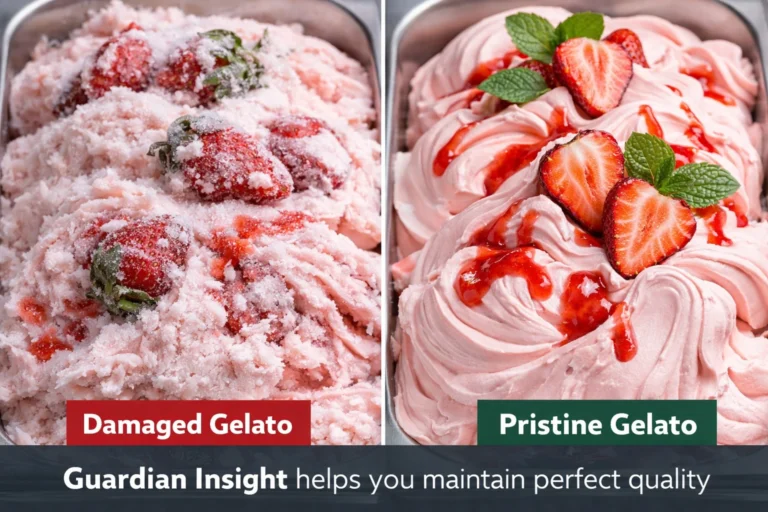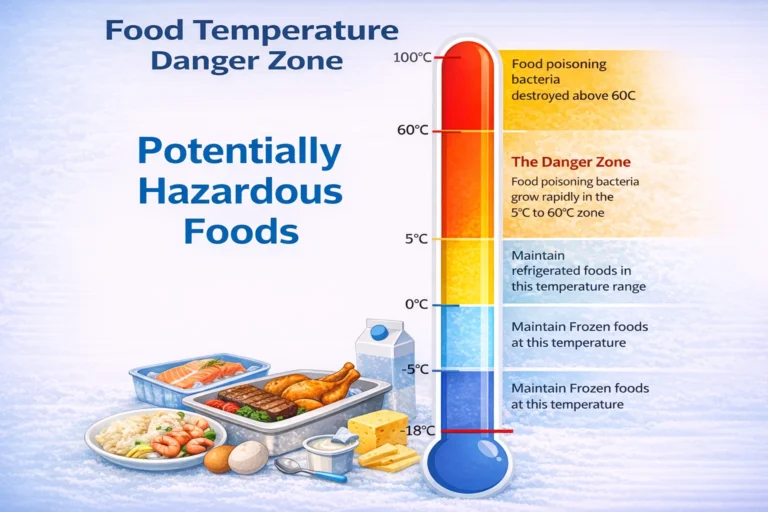
Refrigeration failures rarely happen suddenly — they develop over time.
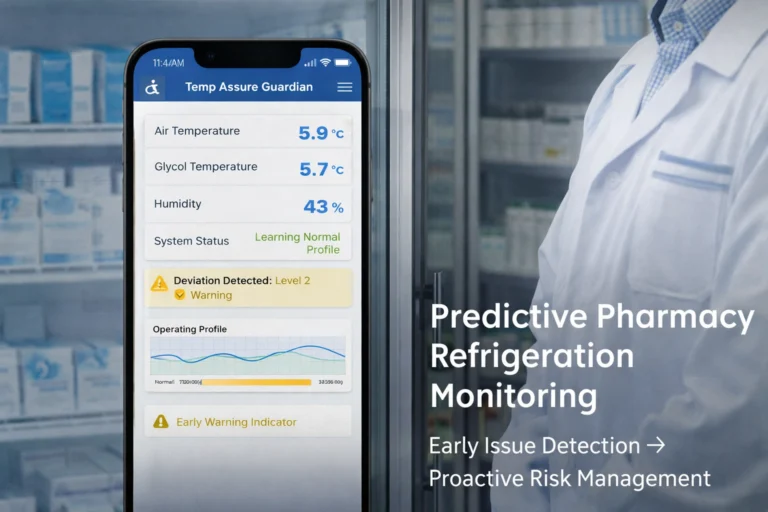
Temp Assure is developing a patented system called Guardian that identifies subtle changes in refrigeration behaviour, allowing intervention before temperature is affected.
This is not simply improved monitoring.
It represents a shift toward predictive control of refrigeration assets.
The Limitation of Current Systems
In aged care, refrigeration supports:
- Food safety
- Medication integrity
- Compliance
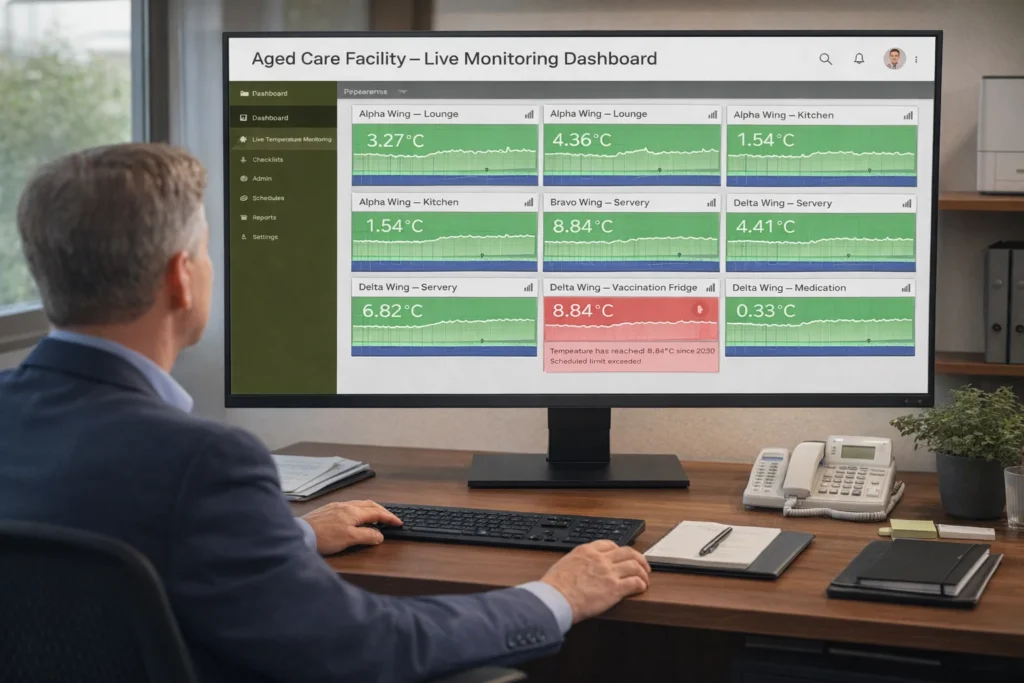
Most systems today rely on temperature alarms.
The limitation is unavoidable:
👉 By the time temperature changes, the failure has already occurred
A More Advanced Approach
Refrigeration systems exhibit complex behavioural changes well before temperature is impacted.
These changes are not visible through conventional monitoring and cannot be identified through simple thresholds.
They require:
- Continuous data capture
- Embedded processing at the device level
- Analysis of multiple interacting variables
- Interpretation of patterns over time
This level of insight is not achievable with traditional monitoring systems.
The Guardian Methodology
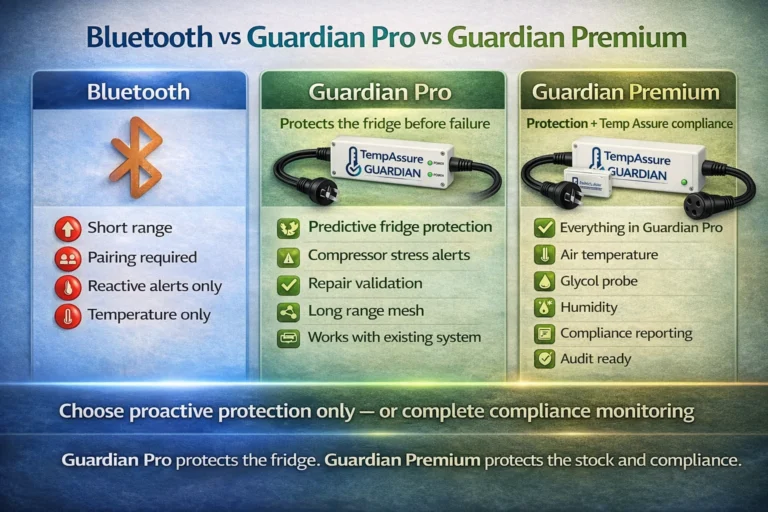
Guardian has been developed to interpret these early behavioural changes using a patented approach.
It is designed to:
- Detect emerging issues before they become failures
- Provide insight into system condition, not just outcomes
- Enable intervention before risk materialises
In addition, Guardian introduces a new capability:
👉 The ability to quantify system performance before and after service or maintenance
This allows:
- Verification that servicing has delivered a measurable improvement
- Identification of ineffective or incomplete maintenance
- Ongoing tracking of asset performance over time
👉 Move from reacting to events → to actively managing asset performance
There is already strong interest in this approach as organisations look beyond reactive monitoring.
Why This Matters
Expectations in aged care are evolving.
It is no longer sufficient to demonstrate: “We responded quickly”
The expectation is shifting toward: “Why was this not identified earlier?”
and increasingly: “Did the maintenance actually improve the system?”
Meeting this expectation requires a different level of system intelligence.
Where This Is Heading
Manual checks are being phased out.
Temperature monitoring is now standard.
The next step is clear:
👉 Systems that identify risk before temperature is affected and verify performance over time
By the end of 2026, this approach is expected to become the new standard in critical environments.
Looking Ahead
Guardian is currently in development and represents a significant advancement in refrigeration risk management.
Its implementation requires:
- Advanced processing capability
- Purpose-built system architecture
- A fundamentally different approach to monitoring
Organisations that engage early will be best positioned to:
- Understand how this capability can be applied
- Improve maintenance outcomes
- Adopt a more proactive model of asset management
Take the Next Step
If you are reviewing temperature risk across your facility, the next step is to evaluate whether your current system:
- Detects problems early enough
- Provides time to act
- Supports proactive maintenance