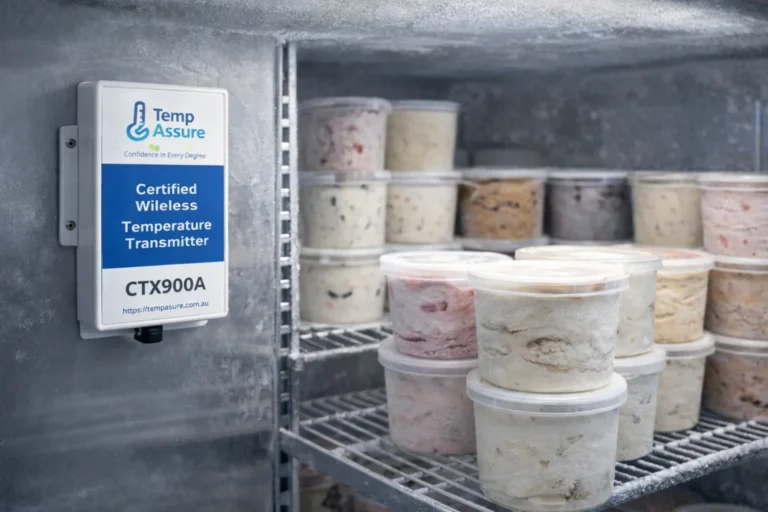
A Practical Compliance Solution for Restaurants and Food Businesses
Food safety compliance in Australia is becoming more structured, more scrutinised, and more visible.
Australian food businesses must comply with national food safety standards established by Food Standards Australia New Zealand (FSANZ), which set requirements for temperature control, hygiene practices and record keeping.
Public breach registers, increased inspection frequency, and stricter documentation expectations mean restaurants must demonstrate active food safety management — not just good intentions.
A digital food safety system provides structured oversight of critical controls including:
- Temperature monitoring
- Cleaning schedules
- Hygiene verification
- Compliance recordkeeping
- Corrective action documentation
For restaurants operating in fast-paced environments, manual log sheets are no longer sufficient.
What Is a Digital Food Safety System?
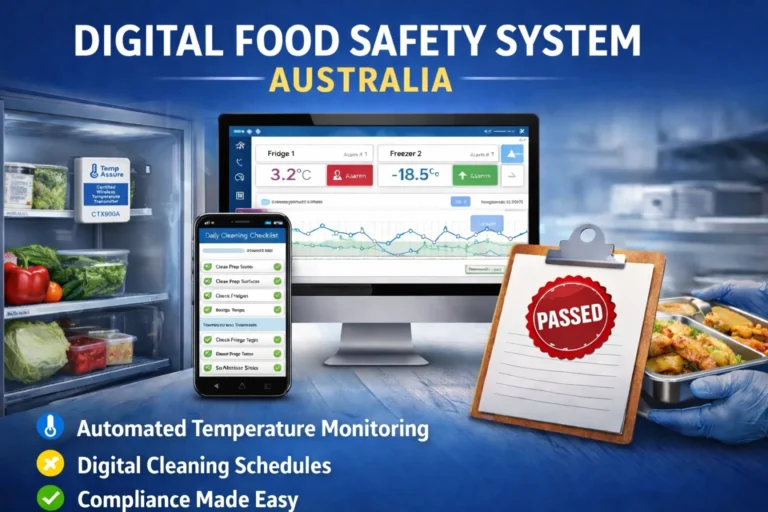
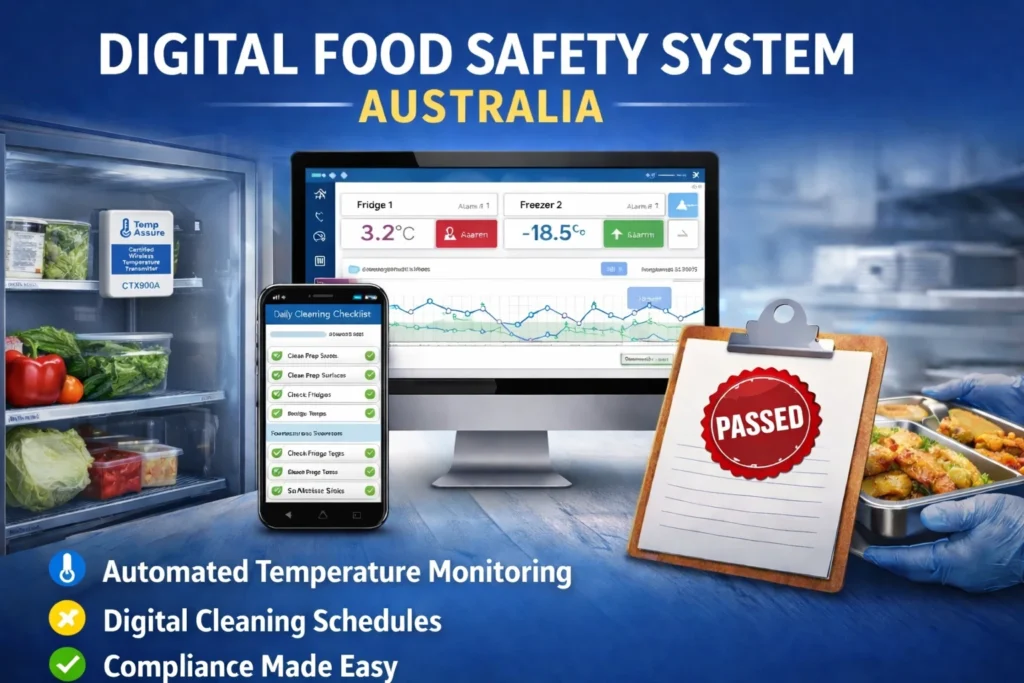
A digital food safety system replaces fragmented paper-based logs with automated, time-stamped, cloud-based compliance records.
Instead of relying on clipboards and handwritten sheets, restaurants can implement:
- Continuous fridge and freezer temperature monitoring
- Automated digital cleaning checklists
- Mobile phone task completion
- Secure audit-ready reporting
- Time-stamped staff sign-off records
This strengthens restaurant food safety compliance across daily operations.
Why Food Safety Compliance in Australia Is Increasingly Data-Driven
Under Australian food standards, food businesses must:
- Store potentially hazardous food at safe temperatures
- Maintain hygienic food preparation environments
- Demonstrate effective monitoring procedures
- Document corrective actions
Inspectors increasingly review not just the presence of logs — but the quality and reliability of monitoring systems.
Meeting restaurant temperature compliance in Australia requires more than manual log sheets.
Common breach categories include:
- Inadequate refrigeration temperatures
- Unhygienic conditions
- Failure to maintain cleaning records
- Incomplete documentation
- Previous warnings given
A digital food safety system provides structured documentation that reduces reliance on manual processes.
Continuous Temperature Monitoring as the Foundation
Restaurants implementing a structured restaurant temperature monitoring system in Australia strengthen both operational control and compliance
Temperature control remains the backbone of restaurant compliance.
A digital food safety system in Australia should include:
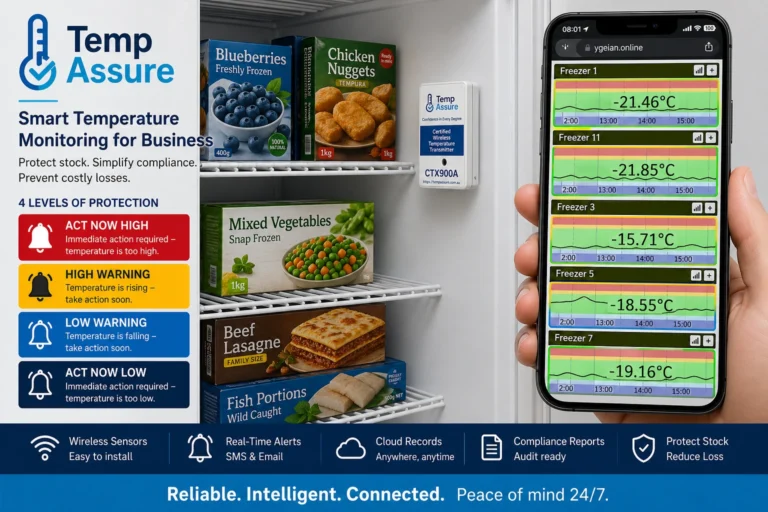
- Continuous fridge and freezer temperature monitoring
- Automated alerts for temperature excursions
- Secure cloud storage of temperature records
- Instant report generation
- Verifiable historical data
.Instead of checking temperatures four times per day, automated temperature monitoring records data 24/7.
This protects against:
- Overnight freezer failure
- Compressor drift
- Door left ajar incidents
- Undetected temperature breaches
Digital Cleaning Schedules and Hygiene Verification
Food safety breaches are not limited to temperature.
Cleaning failures and poor hygiene documentation are frequently cited during inspections.
A practical digital food safety system can automatically generate:
- Opening hygiene checklists
- Mid-shift cleaning confirmations
- Waste area sanitation checks
- Closing cleaning verification
- Weekly deep-clean schedules
Staff can complete checklists via mobile phone.
Each entry is:
- Time-stamped
- Linked to a staff member
- Stored securely
- Available instantly during inspection
This transforms cleaning from a paper task into a verifiable compliance record.
Moving Beyond Paper-Based Logs
Manual systems create risk:
- Missed entries
- Backdated completion
- Lost paperwork
- Incomplete corrective action notes
Digital systems provide:
- Automatic checklist scheduling
- Reminder prompts
- Recorded completion times
- Secure historical storage
- Reduced inspection stress
A structured digital food safety system strengthens restaurant temperature compliance in Australia while improving operational discipline.
A Practical Approach for Restaurants
Many compliance software platforms require:
- High upfront hardware purchases
- Expensive installation
- Long-term contracts
- Complex enterprise configurations
However, modern digital food safety systems can be implemented without capital expenditure.
For restaurants seeking practical compliance control, solutions are available from as little as 66 cents per day per monitored asset, paid quarterly.
This includes:
- Continuous temperature monitoring
- Automated digital cleaning schedules
- Mobile-based task completion
- Cloud-based reporting
Digital Food Safety System Australia: Designed for Scale
Whether operating:
- A single-site restaurant
- A multi-store franchise group
- A quick-service chain
- A café or takeaway
- A digital system provides consistent, structured compliance across all locations.
It supports:
- Audit readiness
- Reduced risk of repeat breaches
- Improved documentation quality
- Operational transparency
Strengthening Restaurant Compliance Through Automation
Food safety compliance is not about passing inspections once.
It is about demonstrating ongoing control.
A digital food safety system automates:
- Monitoring
- Documentation
- Task scheduling
- Record storage
This reduces compliance gaps and improves accountability.
A digital food safety system in Australia is no longer a luxury — it is the foundation of structured, defensible restaurant compliance.