What Are Potentially Hazardous Foods (PHFs) and Why Monitoring Matters
Potentially hazardous foods (PHFs) require strict temperature control to remain safe.
According to Food Standards Australia New Zealand (FSANZ), potentially hazardous foods must be kept under strict temperature control to remain safe.
Protecting potentially hazardous foods is critical in any environment where food safety, compliance, and risk management matter.
When refrigeration systems begin to fail, the risk is not the fridge itself — it’s the stock inside.
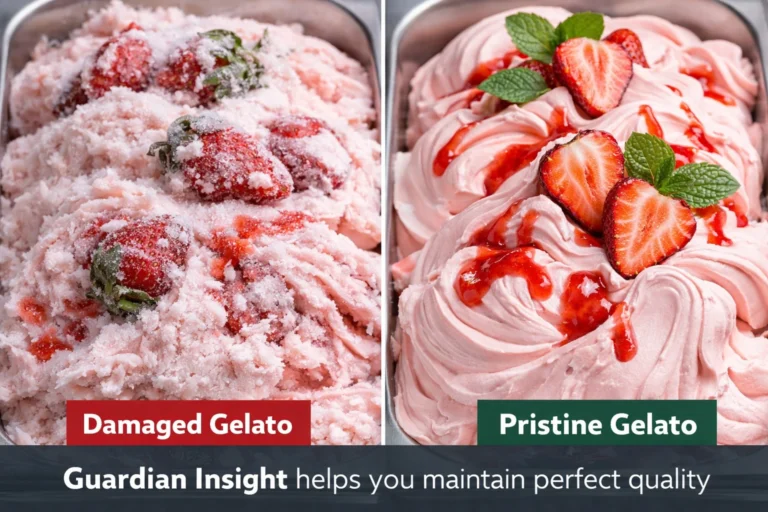
Even small temperature deviations can allow bacteria to grow, putting food safety, compliance, and product value at risk.
The key is not just monitoring temperature — it’s identifying problems early enough to act before your stock is affected.
Common Examples of PHFs
- Meat and poultry
- Seafood
- Dairy products
- Cooked rice and pasta
- Prepared meals
- Eggs and egg products
- Certain ready-to-eat foods
Protecting Potentially Hazardous Foods
Protecting potentially hazardous foods requires more than basic temperature monitoring.
Traditional systems only alert after temperature limits have been exceeded — often when the risk has already occurred.
Refrigeration systems rarely fail without warning. Subtle changes in operating behaviour occur well before temperature is affected, but these are not visible through temperature alone.
A more effective approach is to monitor how the system is operating and identify abnormal behaviour as it develops.
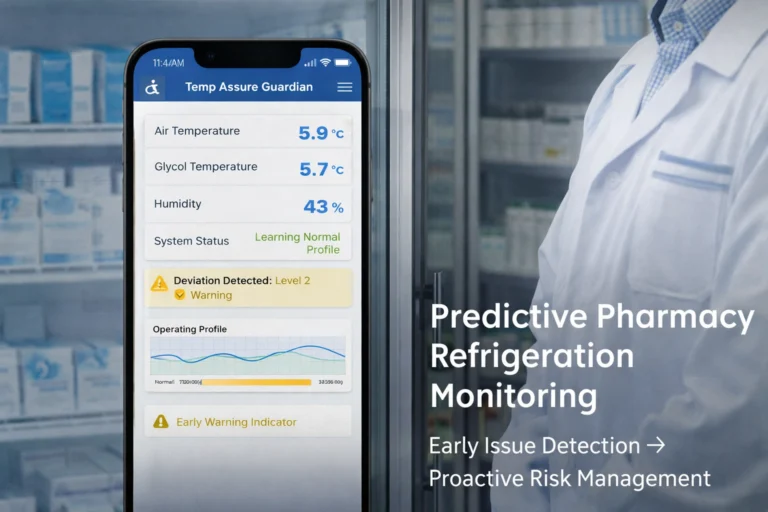
Temp Assure Guardian applies this approach by analysing power consumption and operating patterns to identify developing faults.
This provides early warning — often hours or even days before temperature limits are exceeded — giving you time to act before your stock is at risk.
Why Temperature Control Matters
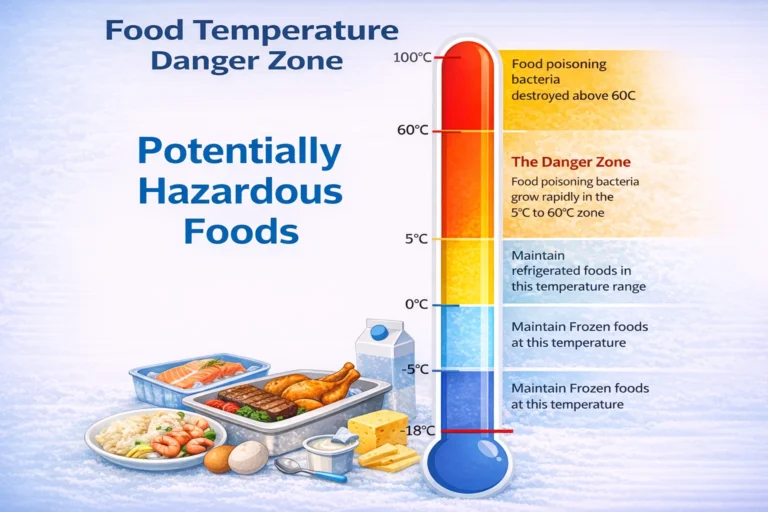
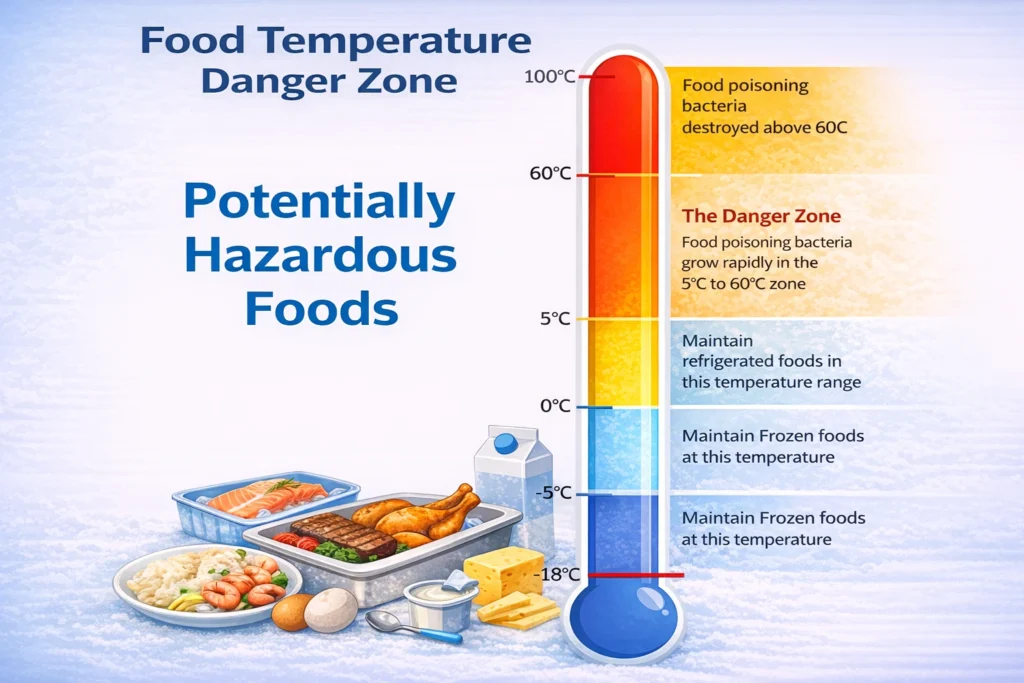
Potentially hazardous foods must be stored outside the temperature danger zone to prevent rapid bacterial growth.
The temperature danger zone between 5°C and 60°C allows bacteria to multiply quickly, increasing the risk of foodborne illness and compliance breaches.
Maintaining safe temperatures is essential — but responding early to potential failures is even more important.
The Real Risk: Delayed Detection
Most monitoring systems only alert when temperature limits are exceeded.
By that point:
- The refrigeration system may already have failed
- The stock may already be compromised
- Compliance may already be breached
Why Traditional Monitoring Falls Short
Traditional temperature-only systems:
- React after temperature rises
- Cannot detect early signs of equipment issues
- Must ignore or delay alerts during defrost cycles
- Often delay alerts by 30–90 minutes or more
By the time an alert is received, the risk to your stock may already be significant.
A Better Approach: Detect Problems Before Temperature Changes
Advanced systems such as Temp Assure Guardian go beyond temperature monitoring by analysing how refrigeration systems operate.
They monitor:
- Power consumption
- Compressor behaviour
- Operating patterns
This allows:
- Detection of developing faults before temperature is affected
- Faster and more reliable alerts
- Reduced false alarms caused by normal defrost cycles
From Detection to Intelligent Alerts
Traditional monitoring systems generate temperature alarms and leave it to the user to determine the cause.
In reality, not every change in refrigeration performance indicates a fault. Events such as loading stock or a door being left ajar can produce patterns that resemble a developing issue.
Temp Assure Guardian addresses this by combining early detection with intelligent prompts.
When abnormal behaviour is identified, Guardian can ask simple, practical questions such as:
- Has the fridge or freezer been recently loaded with stock?
- Please check that the door is fully closed
This interaction helps distinguish normal operating conditions from genuine faults, reducing unnecessary alarms and improving response accuracy.
Protect Your Stock — Not Just Your Equipment
When potentially hazardous foods are involved, the priority is protecting the contents — not the refrigeration system.
Even a low-cost fridge can store high-value or high-risk stock.
Guardian is designed for environments where early detection, compliance, and stock protection are critical.
Why Guardian Is Different
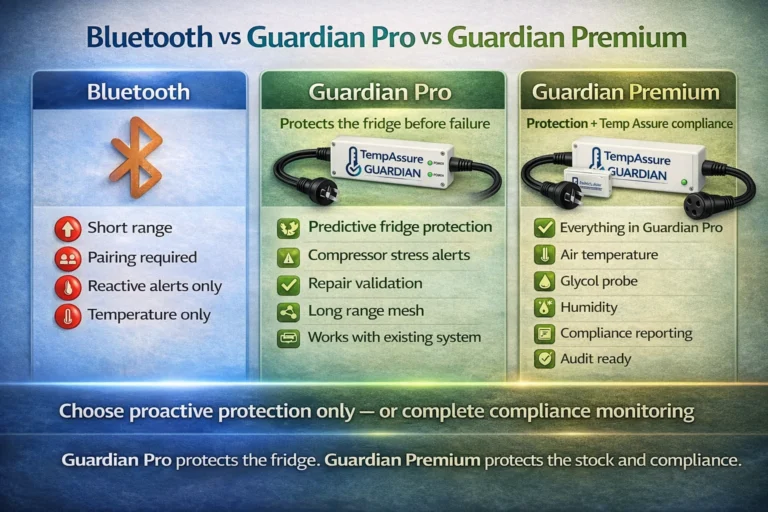
Most systems only monitor temperature. Temp Assure Guardian goes further by detecting problems early and helping you act.
Where This Matters Most
- Commercial kitchens
- Aged care facilities
- Food service operations
- Hospitals and healthcare
- Any site storing PHFs
How Temp Assure Guardian Helps
Temp Assure Guardian detects conditions that put your stock at risk — before temperature limits are exceeded.
- Early fault detection
- Automated compliance logging
- Real-time alerts
- No manual temperature checks
Protect your stock before it’s at risk
Temp Assure Guardian helps protect potentially hazardous foods by identifying problems early — often hours or days before temperature limits are exceeded.