The Key Idea
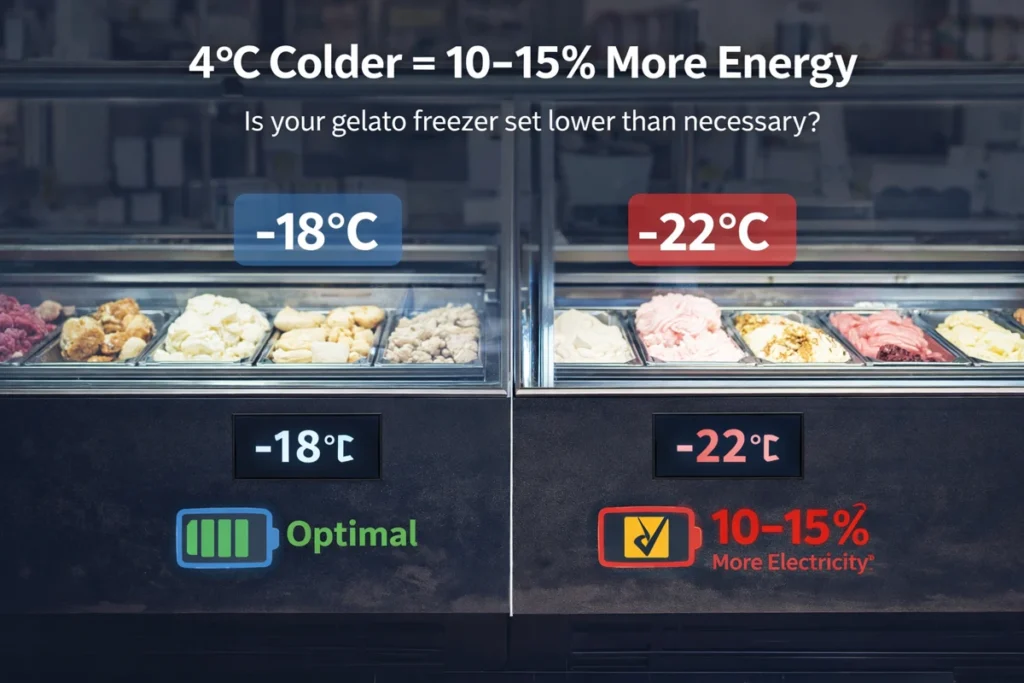
Setting your gelato freezer colder than necessary does not improve product quality.
In fact, running at temperatures like -22°C instead of -18°C can increase energy costs, stress equipment, and provide no real benefit.
👉 The goal is not the lowest temperature — it’s the correct temperature.
In Simple Terms
- Colder is not always better for gelato storage
- Lower temperatures increase energy use and equipment load
- Product quality does not improve below optimal ranges
- Stability and consistency matter more than extreme cold
Why This Happens
Freezers remove heat from the product until it reaches equilibrium.
Once gelato is fully frozen, lowering the temperature further does not significantly change its structure.
However, it does:
- Increase compressor run time
- Raise energy consumption
- Accelerate wear on refrigeration components
This means colder settings deliver diminishing returns while increasing operational cost.
What Is the Ideal Gelato Freezer Temperature?
For storage, gelato is typically kept around:
👉 -18°C
This provides:
- Stable product condition
- Efficient energy use
- Reduced strain on equipment
Lower temperatures may be used in specific cases, but they are not generally required for maintaining quality.
What Happens When Freezers Are Set Too Cold
Operating below the ideal range can lead to:
- Higher electricity costs
- Increased compressor cycling
- Faster equipment wear
- No measurable improvement in product quality
In many cases, operators lower temperatures as a precaution — but this often results in unnecessary cost without added benefit.
Energy and Equipment Impact
Running a freezer at excessively low temperatures increases the workload on the refrigeration system.
This leads to:
- Longer compressor run times
- Higher peak loads
- Increased maintenance requirements
- Reduced equipment lifespan
Across multiple freezers, this can significantly impact operating costs.
Temperature vs Performance
Setting the correct temperature is only part of effective freezer management.
Even when a freezer is set correctly, system performance can change due to:
- Compressor efficiency
- Refrigerant performance
- Ambient conditions
- Equipment wear over time
These factors influence how well a freezer maintains stable conditions.
👉 Temperature alone does not reveal how the system is behaving.
What This Means in Practice
For gelato operators, the focus should be on:
- Maintaining consistent, stable conditions
- Avoiding unnecessary overcooling
- Reducing energy consumption
- Extending equipment life
Small adjustments to temperature settings can have a meaningful impact on both cost and performance.
Where to Go Next
- For display conditions, see our guide to gelato display cabinet temperature
- For broader storage considerations, see ice cream cold chain compliance in Australia
- If you want to go beyond temperature settings and detect issues before they affect product quality: learn more about the Guardian Insight monitoring system