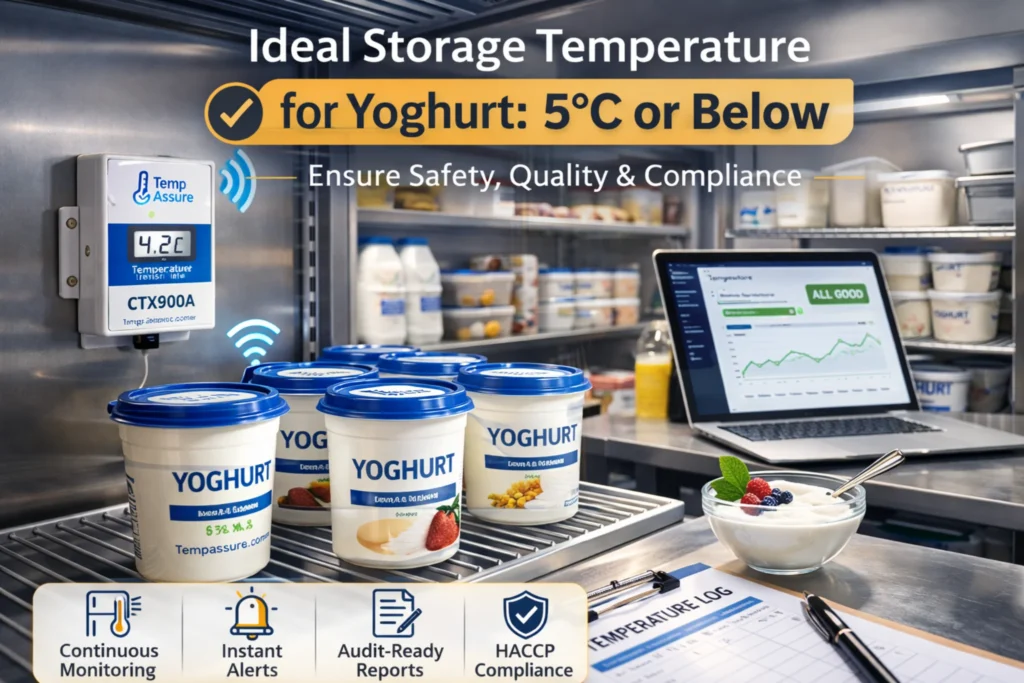
The ideal storage temperature for yoghurt is 5°C or below to remain safe for consumption and compliant with Australian food safety standards.
In commercial kitchens, community kitchens, aged care facilities and food production environments, maintaining consistent cold storage temperatures is essential to prevent spoilage, preserve quality, and meet HACCP requirements.
Even small temperature fluctuations can shorten shelf life and increase food safety risk.
Why Yoghurt Is Temperature Sensitive
Unlike many packaged foods, yoghurt contains live bacterial cultures. These cultures give yoghurt its texture and flavour — but they also make it sensitive to temperature changes.
When stored above 5°C:
- Shelf life decreases rapidly
- Separation and texture breakdown can occur
- Flavour quality deteriorates
- Food safety risks increase
For bulk yoghurt used in aged care, schools, hospitals or catering services, consistency is critical.
Commercial Refrigeration and Cold Room Storage
In commercial kitchens, yoghurt is typically stored in:
- Reach-in fridges
- Upright commercial refrigerators
- Cool rooms
- Distribution transport units
All of these environments must maintain stable temperatures at or below 5°C.
The challenge is not simply setting the thermostat correctly — it is ensuring the temperature remains stable throughout the day and overnight.
Door openings, staff changes, compressor cycling and power interruptions can all cause unnoticed temperature drift.
Australian Food Safety Requirements
Under Australian food safety standards, potentially hazardous foods such as yoghurt must be stored under temperature control.
This generally means:
- Cold food at 5°C or below
- Continuous temperature monitoring or documented checks
- Records available for inspection
Manual temperature logs are still common in many kitchens, but they rely on staff consistency and accurate recording.
Missed checks, incomplete logs, or undocumented fluctuations can create compliance risk.
The Limits of Manual Temperature Logging
Many kitchens record fridge temperatures once or twice daily.
However, this approach cannot detect:
- Overnight compressor failures
- Short-term temperature spikes
- Equipment cycling issues
- Power interruptions outside business hours
A fridge may read 4°C at 4pm — but may have reached 10°C at 2am the next morning without anyone knowing.
For services supplying vulnerable populations, this risk is significant.
Maintaining Quality and Confidence
For commercial kitchens, aged care facilities and food production environments, yoghurt storage is a small but important part of overall food safety.
Maintaining consistent temperatures at or below 5°C protects:
- Product quality
- Consumer safety
- Compliance standing
- Operational reputation
As food safety expectations increase, automated monitoring is becoming the standard approach for cold storage environments.
Replace manual logs and protect your valuable stock for a predictable monthly cost.
For Further Information here is a list of Related Dairy Product Temperature Guides
| Topic | Quick Jump |
|---|---|
| Ice Cream freezer temperature best practice | https://tempassure.com.au/what-is-the-ideal-ice-cream-freezer-temperature-for-commercial-storage/ |
| Yoghurt storage temperatures in commercial kitchens | https://tempassure.com.au/what-is-the-ideal-yoghurt-storage-temperature-in-commercial-kitchens/ |
| Cheese temperature monitoring tips | https://tempassure.com.au/why-cheese-temperature-monitoring-should-never-be-manual/ |
| Gelato display cabinet temps | https://tempassure.com.au/setting-the-ideal-gelato-display-cabinet-temperature-and-what-happens-if-it-drifts/ |
| Gelato freezer comparison: -22 vs -18 | https://tempassure.com.au/gelato-freezer-temperature-22-vs-18/ |