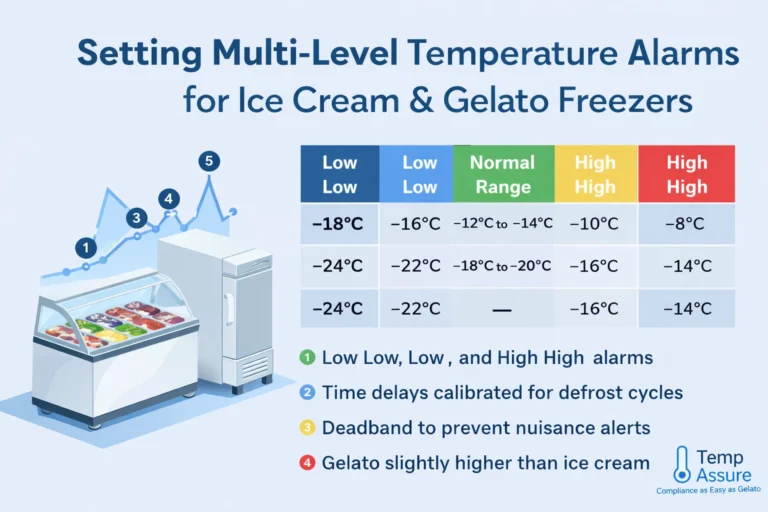
The Key Idea
Gelato display cabinet temperature directly affects texture, consistency, and presentation.
Even small deviations can make gelato too soft, too hard, or prone to ice crystal formation.
👉 The goal is not just keeping gelato cold — it’s maintaining the right serving condition.
In Simple Terms
- Display temperature controls texture and scoopability
- Small changes can affect product quality quickly
- Too warm = soft and unstable
- Too cold = hard and less appealing
- Stability matters more than extremes
Why This Happens
Gelato is served at warmer temperatures than ice cream and contains less air.
This makes it more sensitive to temperature variation.
When cabinet temperature drifts:
- Slight warming can soften the product
- Repeated fluctuations can cause ice crystal formation
- Overcooling can make gelato too firm to serve properly
These changes directly affect customer experience.
What Is the Ideal Gelato Display Cabinet Temperature?
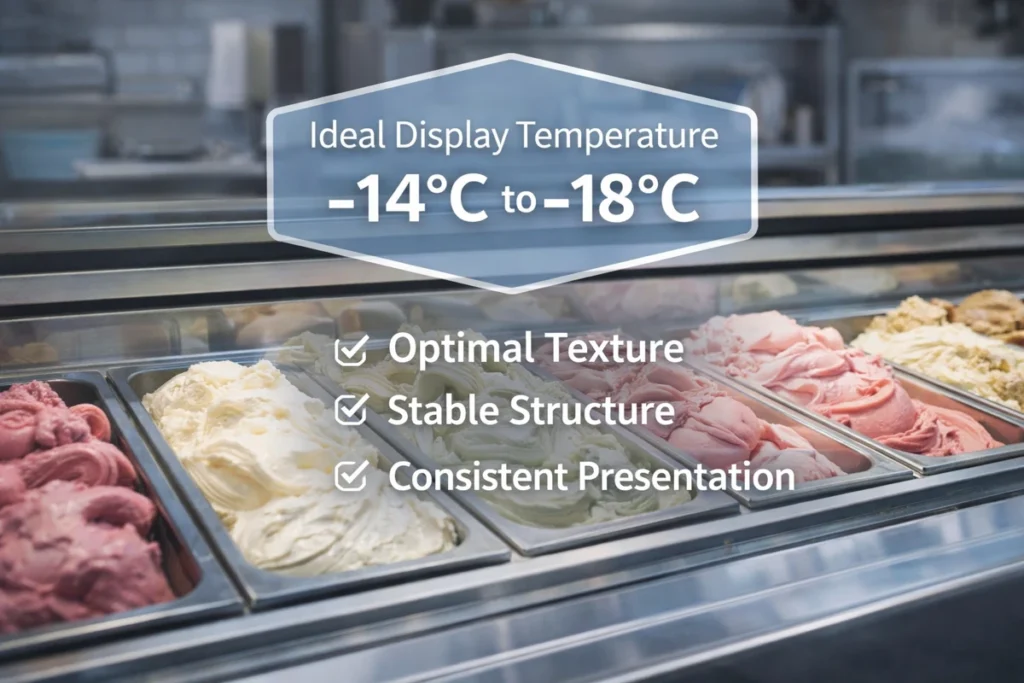
Gelato is typically displayed at:
👉 -10°C to -14°C
This range allows for:
- Smooth texture
- Consistent scoopability
- Optimal presentation
Maintaining a stable temperature within this range is critical.
What Happens When Temperature Drifts
Even small variations can lead to noticeable issues:
Too Warm:
- Gelato becomes soft
- Structure weakens
- Product may collapse in the tray
Too Cold:
- Gelato becomes hard
- Scoopability is reduced
- Texture becomes less appealing
Fluctuating Conditions:
- Ice crystals can form
- Surface quality degrades
- Product consistency becomes uneven
Common Causes of Temperature Drift
Display cabinet performance can be affected by:
- Frequent door or lid opening
- Ambient temperature changes
- Cabinet load and restocking
- Airflow and ventilation
- Equipment cycling behaviour
These factors can cause subtle but repeated temperature changes.
Why Stability Matters More Than Setpoint
Many operators focus on the set temperature.
However, stability is often more important than the exact number.
A cabinet that fluctuates within a range can cause more damage than one that is slightly off but stable.
👉 Consistency protects texture and presentation.
What This Means in Practice
For gelato operators, maintaining the correct display conditions helps:
- Preserve texture and mouthfeel
- Maintain visual appeal
- Ensure consistent serving quality
- Reduce waste and rework
Even small improvements in stability can have a noticeable impact.
Where to Go Next
- For storage conditions, see our guide to ideal gelato freezer temperature
- For broader compliance considerations, see ice cream cold chain compliance in Australia
- If you want to detect issues before they affect product quality: Learn more about the Guardian Insight monitoring system