The Key Idea
Ice cream compliance is not just about temperature — it’s about maintaining control across the entire cold chain.
Even small, short-term temperature fluctuations can permanently affect product quality, shelf life, and compliance status.
👉 Most issues occur before they are detected through manual checks.
In Simple Terms
- Ice cream must remain consistently frozen across storage and transport
- Small temperature changes can damage product quality
- Manual checks often miss critical events
- Compliance requires traceable, continuous control
Why This Happens
Ice cream is highly sensitive to temperature variation.
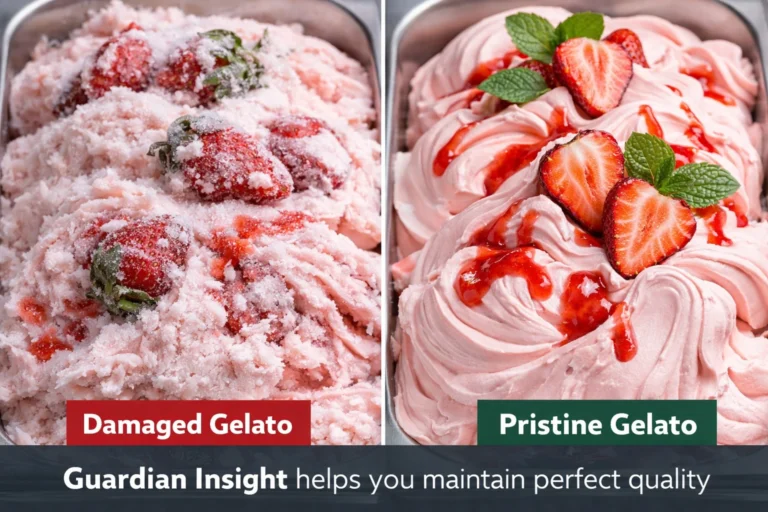
Even brief warming can initiate partial melting, followed by refreezing.
This leads to:
- Ice crystal growth
- Grainy texture
- Product shrinkage
- Reduced shelf life
These changes are often invisible until the product is served.
Ice Cream vs Gelato: Why Storage Requirements Differ
Although both are frozen dairy products, ice cream and gelato behave differently in commercial environments.
Ice cream is typically manufactured, transported, and stored in bulk across warehouses, supermarkets, and distribution centres.
Ice cream storage requirements focus on long-term stability and compliance across the cold chain.
Gelato, by contrast, is often displayed at warmer temperatures where texture and presentation are critical.
For this reason, ice cream storage compliance centres on maintaining consistent sub-zero conditions at all times, not just at the point of sale.
Why Ice Cream Requires Stable Low Temperatures
At temperatures warmer than recommended:
- Ice crystals enlarge
- Texture becomes coarse
- Freezer burn may develop
- Shelf life is reduced
Repeated small temperature rises — even if the product refreezes — can permanently affect quality.
This is especially critical for:
- Retail display freezers
- Commercial kitchens
- Aged care and healthcare facilities
- Food distributors
- Cold storage warehouses
Australian Cold Chain Compliance Requirements
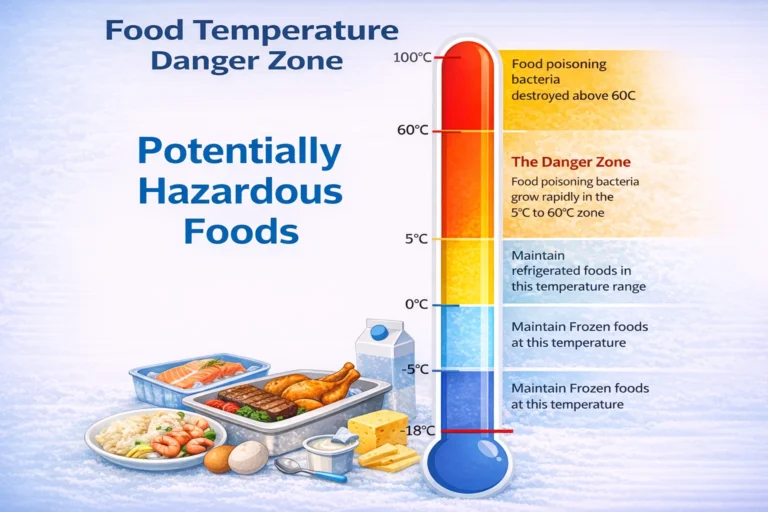
Under Australian food safety standards, frozen foods must remain frozen during storage and distribution.
For commercial operators, compliance involves more than simply setting a thermostat.
Businesses must be able to demonstrate:
- Temperatures remain within defined limits
- Records are accurate and traceable
- Data is available for inspection
- Corrective action is taken when required
- Equipment performance is controlled over time
The Limits of Manual Freezer Checks
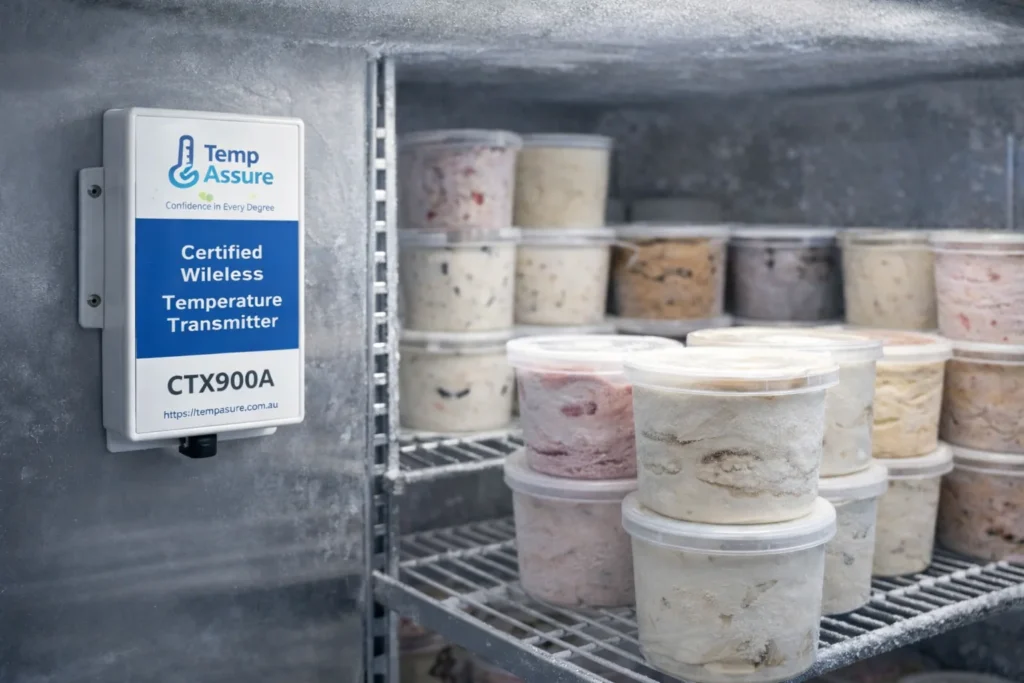
Many facilities still rely on periodic manual checks.
However, this approach cannot detect:
- Overnight compressor cycling issues
- Power interruptions
- Defrost cycle temperature spikes
- Gradual performance decline
A freezer may appear compliant during the day, but experience significant variation overnight.
Cold Chain Risk During Storage and Distribution
Ice cream is exposed to risk at multiple points:
- Warehouse storage
- Transport loading and unloading
- Retail freezer access
- Equipment cycling behaviour
Even short-duration events can lead to:
- Ice crystal formation
- Texture degradation
- Reduced product consistency
- Increased waste
For multi-site operators, this creates both compliance risk and financial risk.
Monitoring and Record Keeping Requirements
Maintaining compliance requires more than temperature settings — it requires evidence.
Operators must demonstrate:
- Continuous temperature control
- Reliable data collection
- Traceable records over time
- Timely response to deviations
Without continuous monitoring, problems can go undetected.
What This Means in Practice
Maintaining stable frozen conditions protects:
- Product texture and quality
- Shelf life and consistency
- Compliance standing
- Brand reputation
Temperature stability is not just about safety — it directly impacts product performance.
Where to Go Next
- For gelato-specific storage temperatures, see our guide to ideal gelato freezer temperature
- For display cabinet conditions, see gelato display cabinet temperature
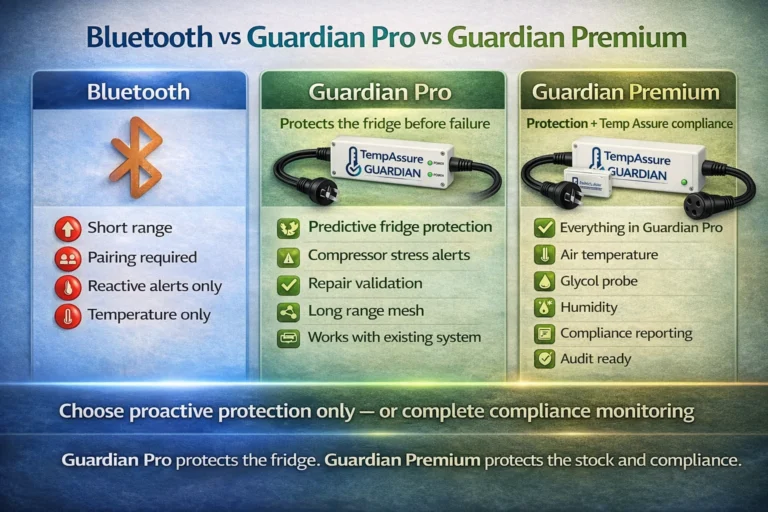
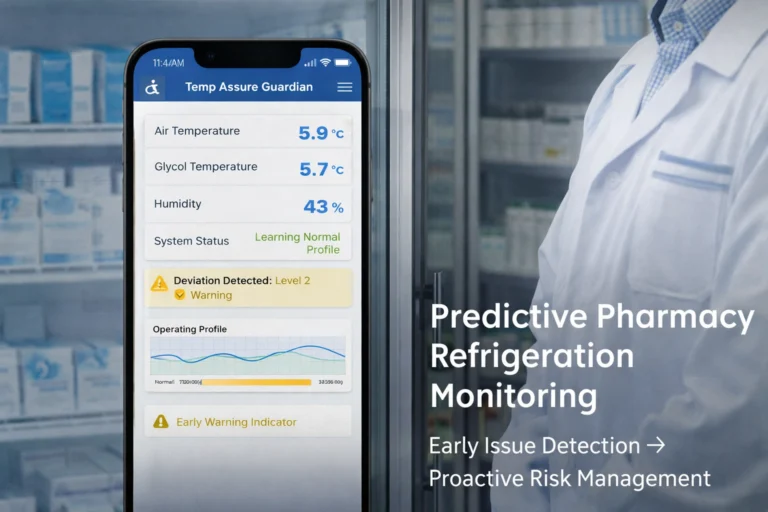
- If you want to move beyond manual checks and better understand freezer performance over time, learn more about the Guardian Insight monitoring system