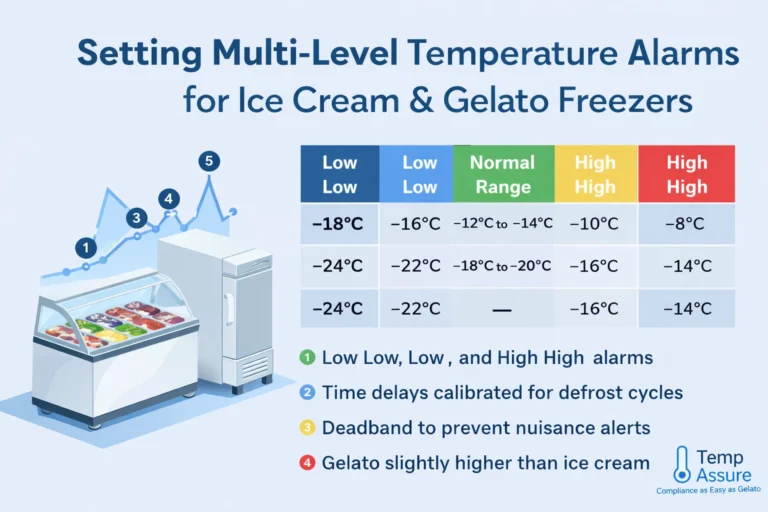
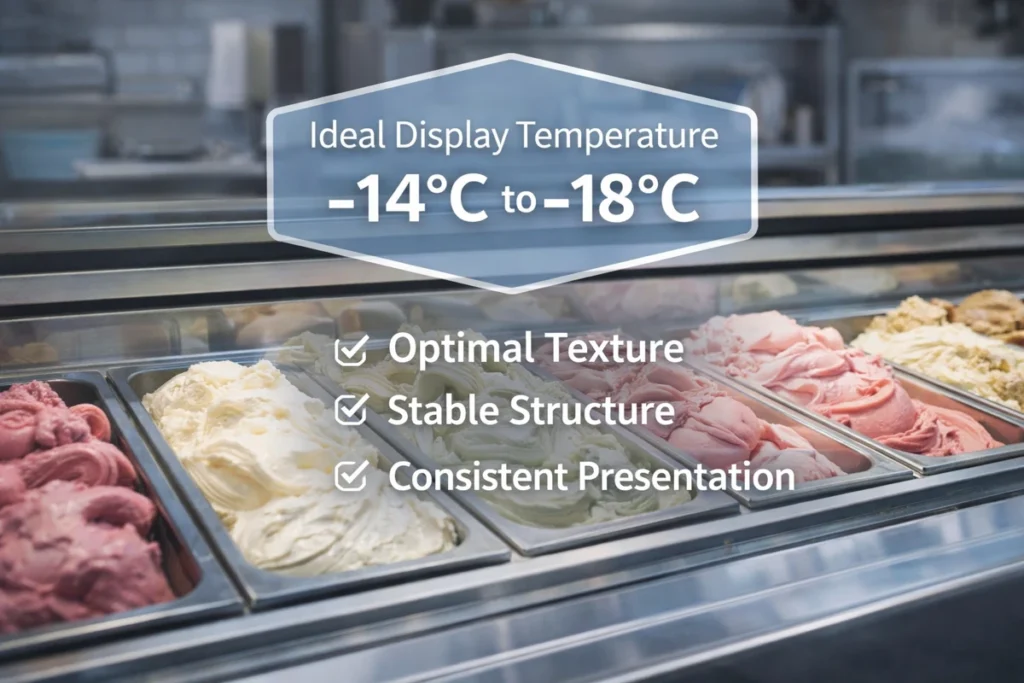
The ideal gelato display cabinet temperature is −14°C to −18°C.
Keeping your cabinet within this range maintains texture, structure and presentation. Even a small temperature drift can affect quality — and in extreme cases, lead to product loss.
If you operate a gelato store, understanding the correct display cabinet temperature is critical.
Ideal Gelato Display Cabinet Temperature
For most artisan gelato:
-14°C to -18°C is the optimal serving range.
- Warmer than -12°C → texture softens, structure collapses.
- Colder than -20°C → product becomes overly hard and energy consumption increases unnecessarily.
This gelato display cabinet temperature range ensures optimal serving consistency without unnecessary energy strain.
Unlike ice cream, gelato contains less fat and more air-sensitive structure — making it more vulnerable to temperature drift.
Why Temperature Drift Happens
Even modern display cabinets can fluctuate due to:
- Door openings during busy service
- Overnight compressor cycling
- Thermostat calibration drift
- Power interruptions
- Poor airflow across pans
Many operators assume their freezer is “fine” — until a morning inspection reveals soft product.
By then, the damage is already done.
The Real Risk: Overnight Failure
Most major gelato losses occur overnight.
A compressor fault or thermostat failure at 2am can allow a cabinet to rise from -16°C to -6°C within hours.
By opening time, the product may look acceptable — but texture, structure and safety may already be compromised.
One failure can wipe out weeks of profit.
Manual Temperature Logs Aren’t Enough
Many small operators still rely on:
- Once-daily manual checks
- Paper temperature logs
- Visual inspection
But temperature drift doesn’t happen conveniently during business hours: it often occurs outside business hours — long before a manual check is made.
Without continuous monitoring, problems go unnoticed for way too long to preserve product quality.
Continuous Gelato Temperature Monitoring
Automated temperature monitoring provides:
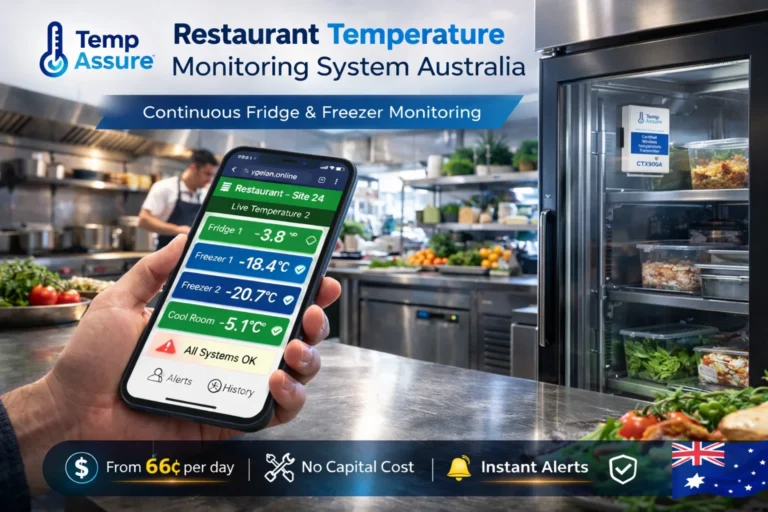
- Real-time freezer temperature tracking
- SMS and email alerts
- Secure cloud temperature records
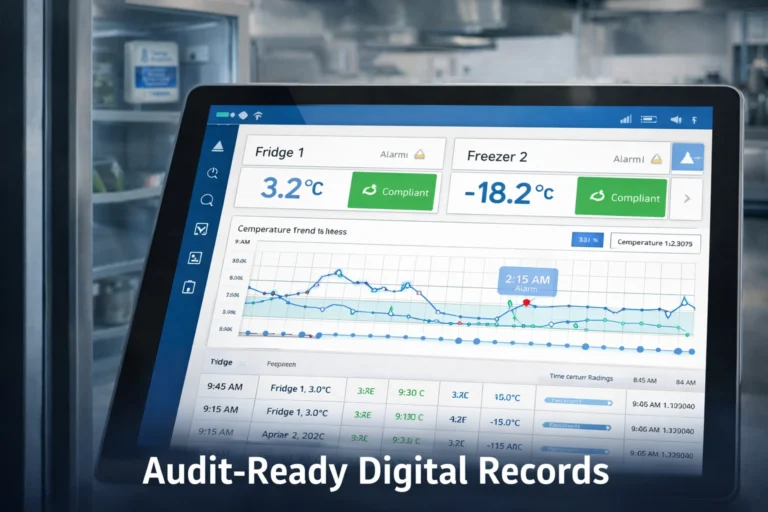
- Audit-ready reports
- Energy optimisation insight
For less than the cost of one scoop per week per cabinet, operators can protect thousands of dollars in stock.
Protect Product & Profit
If you operate gelato display cabinets, storage freezers or preparation fridges, continuous temperature monitoring isn’t just about compliance — it’s about protecting margin.
Learn more about professional gelato freezer temperature monitoring here →
Start Monitoring Today
Subscription monitoring is available from $22 per asset per month or $60 per asset per quarter
→ Start Monthly Billing $22 per month per monitoring point
→ Start Quarterly Billing (Best Value) $60 per quarter per monitoring point
Frequently Asked Questions About Gelato Display Cabinet Temperature
What is the ideal temperature for a gelato display cabinet?
For most artisan gelato, the ideal display temperature range is −14°C to −18°C. This maintains texture and structure while avoiding unnecessary energy consumption.
Is −22°C too cold for gelato?
In most cases, yes.
Running at −22°C instead of −18°C can increase electricity usage by 10–15%, increase compressor strain, and make product unnecessarily hard during service — without improving protection.
Does colder temperature make gelato safer?
No. Once gelato is within the correct frozen range, colder temperatures do not significantly improve safety. Food safety depends more on stability and consistency than excess cooling.
How can I tell if my cabinet is overcooling?
Signs include:
- Product too hard during service
- High electricity bills
- Frequent compressor cycling
- Ice buildup
- Setpoint drift over time
Trend monitoring is the most reliable way to detect overcooling.
Small Temperature Differences Have a Big Impact on Quality and Operations
A 4°C difference might not sound significant.
But across multiple cabinets, every degree below −18°C can quietly increase operating costs — year after year.
Here we show you the cost implications of running your temperatures below −18°C
Professional temperature monitoring doesn’t just protect against failure.
It helps you optimise performance.
If you operate gelato display cabinets or storage freezers, continuous monitoring gives you:
- Real-time alerts
- Trend visibility
- Setpoint optimisation insight
- Audit-ready temperature records
Start Monitoring Today
Subscription monitoring is available from $22 per asset per month or $60 per asset per quarter
→ Start Monthly Billing $22 per month per monitoring point
→ Start Quarterly Billing (Best Value) $60 per quarter per monitoring point
For Further Information here is a list of Related Dairy Product Temperature Guides
| Topic | Quick Jump |
|---|---|
| Ice Cream freezer temperature best practice | https://tempassure.com.au/what-is-the-ideal-ice-cream-freezer-temperature-for-commercial-storage/ |
| Yoghurt storage temperatures in commercial kitchens | https://tempassure.com.au/what-is-the-ideal-yoghurt-storage-temperature-in-commercial-kitchens/ |
| Cheese temperature monitoring tips | https://tempassure.com.au/why-cheese-temperature-monitoring-should-never-be-manual/ |
| Gelato display cabinet temps | https://tempassure.com.au/setting-the-ideal-gelato-display-cabinet-temperature-and-what-happens-if-it-drifts/ |
| Gelato freezer comparison: -22 vs -18 | https://tempassure.com.au/gelato-freezer-temperature-22-vs-18/ |